
NaFQuAir Project: ESTACA studies the impact of fine particles from cruise ships on air quality
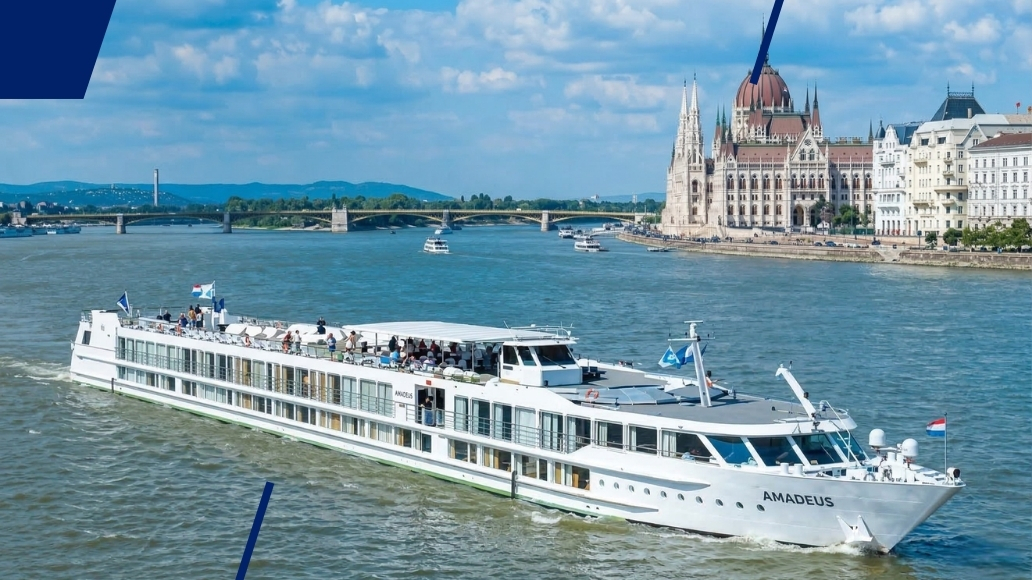
Often considered more environmentally friendly than road transport in terms of CO₂ emissions, inland waterway transport can nevertheless be a significant local source of air pollution. ESTACA is involved in the NaFQuAir research project, supported by ADEME and selected under the AQACIA call for projects. This project aims to better assess the impact of fine and ultrafine particles emitted by cruise and freight vessels on air quality, both on board and for nearby populations.
Exposure levels that can sometimes be very high
River navigation and diesel engines used on cruise ships can generate high concentrations of fine particles (PM10, PM2.5) and ultrafine particles (<100 nm), which are particularly harmful to health. These emissions affect both the air on board vessels and areas close to ports and waterways.
Available studies, still relatively limited, show that concentrations can be extremely high in certain situations. Measurement campaigns have recorded up to 380,000 ultrafine particles per cm³—nearly 70 times higher than typical urban background levels.
Several factors explain these exposure levels: the frequent location of ports in city centers, a European inland fleet still largely composed of older engines, and emission peaks during start-up, maneuvering phases, or when ships remain docked with engines running.
A research project to better understand and take action
The NaFQuAir project (Inland Navigation and Air Quality), conducted over three years, aims to better characterize these emissions and their dispersion in the environment. It is part of the AQACIA program, under an ADEME initiative funded by the French government.
ESTACA’s Structures, Composites and Environment research unit is responsible for in-situ testing. More broadly, the project combines three complementary approaches:
- measurement campaigns under real conditions on board a partner ship to characterize air quality depending on engine types;
- atmospheric wind tunnel testing (Eiffel wind tunnel + ESTACA) using a ship model and a 3D-printed port environment;
- 3D numerical modeling (CFD) carried out by the LEMTA laboratory at the University of Lorraine to simulate particle dispersion at local and urban scales.
Unlike existing studies focused mainly on gaseous pollutants, the project introduces advanced two-phase modeling combined with multi-scale experimental validation. The first measurement campaigns are scheduled before the summer.
Towards a diagnostic tool and operational recommendations
“The study covers all operating phases and aims to produce a generalized diagnostic tool capable of mapping exposure and identifying risk areas on board. The results will help formulate operational recommendations to reduce exposure to pollutants and guide urban and port planning,” explains Georges Fokoua, lecturer-researcher and project leader at ESTACA.
Recognized expertise of ESTACA in air quality
With NaFQuAir, ESTACA confirms its expertise in studying air quality related to transport systems. The school has already carried out several research projects in this field, including:
- EMINAV, focused on gaseous emissions in maritime transport;
- CAPNAV, dedicated to particulate emissions from ships;
- AMCOAIR, on air quality characterization protocols inside vehicle cabins;
- CAPTIHV, focused on pollution measurements in the Paris region and infiltration processes in vehicle interiors.
The project, coordinated by Boris Arcen (LEMTA), is carried out by a consortium including LEMTA (University of Lorraine), the Eiffel wind tunnel, ESTACA, and a shipping company partner.