

ESTACA, gateway to the motorsport industry
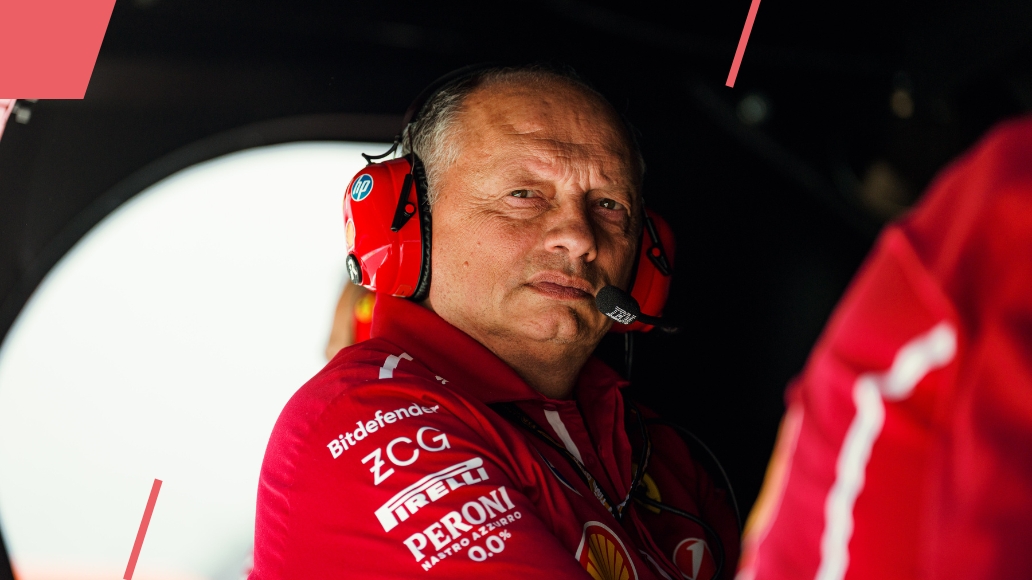
ESTACA is one of the engineering schools most strongly represented in the world of Formula 1. A recent article in La Tribune highlights its excellence and cites two French team principals, Fred Vasseur and Laurent Mekies, who graduated from the school.
ESTACA stands out for its ability to train engineers who make their mark in paddocks around the world, including at the very highest level of Formula 1. In an article titled “How French engineers make their mark in the paddock,” La Tribune highlights the two leaders of the biggest Formula 1 teams, both ESTACA graduates.
Frédéric Vasseur (Class of 1995), now at the helm of Scuderia Ferrari, and Laurent Mekies (Class of 2000), Director at Red Bull Racing, embody this success. Their exemplary careers demonstrate how well ESTACA’s automotive engineering education aligns with the demands of the motorsport world.
A French approach that makes the difference, according to La Tribune
La Tribune’s article highlights a particular characteristic of French engineering training, quoting Matthieu Dubois, Head of Race Strategy at Red Bull:
“I wouldn’t say that the programs are better [in France], but they’re different and therefore complementary… Simply put, to test the strength of a part, an English engineer will put loads on it until it breaks. A French engineer will start with calculations.”
This approach, focused on deep and rigorous engineering, is a major asset that ESTACA passes on to its future engineers.
ESTACA, a gateway into motorsport: employment statistics for the most recent graduating class
While motorsport represents a niche within automotive engineering, ESTACA ensures strong professional integration in this field. An internal study by the school confirms this strong trend:
-
18.6% of the 2024 graduates from the Automotive Engineering program (26 of 140 students) found a job directly in motorsport. They mainly work in Single Seater categories (46%: F1, Formula E, F2…) and Prototype racing (35%: WEC/IMSA…), serving in a variety of roles — half as data/performance/race engineers (50%) but also in embedded systems, pneumatic engineering, simulation, composite materials, R&D, and aerodynamics.
-
The Post-master ‘Motorsport Engineering Performance’ is even more specialized, with 70% of its graduates entering the motorsport sector. Here too, data/performance/race engineers (73%) are in high demand, working in categories such as Prototype (27%), Single Seater (18%), and GT (18%).
These statistics illustrate ESTACA’s unique ability to train engineers who are immediately operational and highly qualified for the demanding world of motorsport.